A New Direction in Pen-ek Ratanaruang’s Cinematic Journey
“My new movie? I think it’s a romantic comedy,” joked Pen-ek Ratanaruang, the acclaimed director, when asked to describe his latest film Morte Cucina (Khrua Sao). “It is a romance film that talks about love, though it might be a bit of a strange one. Anyone who watches it will see that it is highly romantic and very much a black comedy. It is a story about the power of food and how it is used to win someone’s heart.”
Morte Cucina is a tale of revenge through cooking, marking Pen-ek’s return to feature films after spending the past two years directing 6ixtynin9 The Series for Netflix. At first glance, the film appears to be a psychological thriller centered on a woman seeking revenge against the man who destroyed her life.
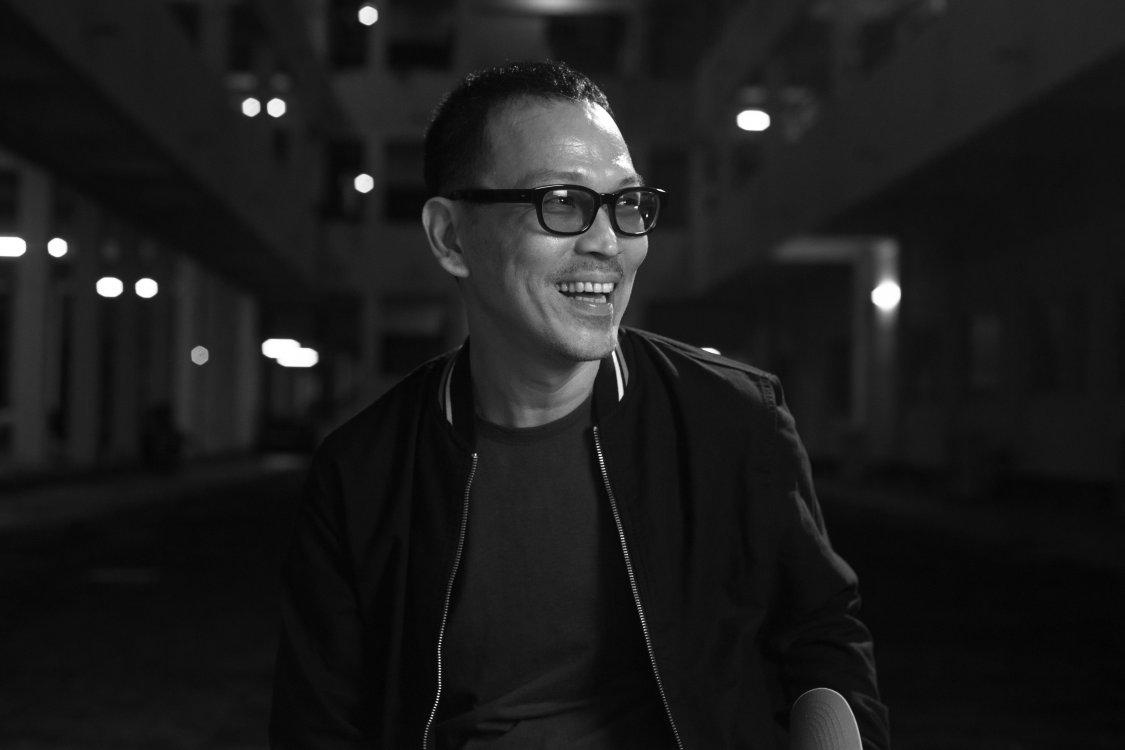
Director Pen-ek Ratanaruang. (Photos courtesy of Sahamongkol Film International)
Beneath its unsettling premise lies a far more unconventional story that blends romance, black comedy, and culinary tradition into something uniquely Pen-ek. Rather than relying on familiar genre conventions of poison or violence, the director transforms Thai cuisine into the film’s primary language of desire, manipulation, and emotional conflict.
The seed of the story came from an unexpected real-life incident that had stayed in Pen-ek’s mind for years.
“I might be misremembering, but the idea was that there was a news story about a woman who walked into a police station and suddenly confessed to murdering her husband,” he said. “She described how she killed him, saying she had been living with him and used various methods, like cooking for him and gradually poisoning him.”
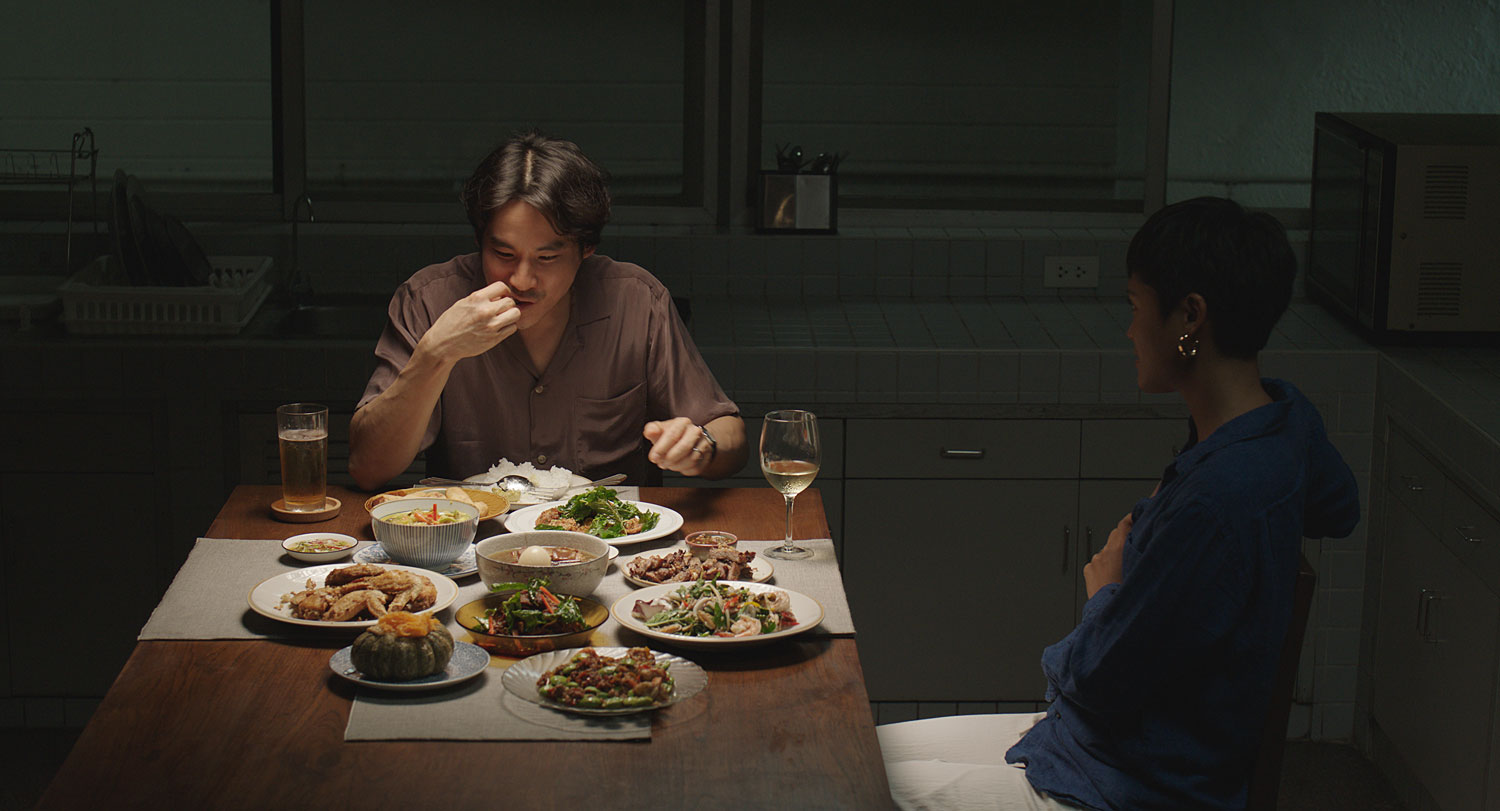
Scenes from Morte Cucina.
“Ultimately, the woman couldn’t be held accountable because simply cooking for her husband wasn’t a crime, of course. However, if you poison someone, that’s a straightforward charge. I thought it was a strange idea, so I developed it into a movie script. The original script wasn’t like the current version; you’ll see how much it’s been changed when you watch it.”
Although the finished film retains the idea of revenge carried out through food, Pen-ek deliberately moved away from the familiar notion of poisoning. Instead, he drew inspiration from traditional Thai culinary wisdom, where food has long been regarded not only as nourishment but also as medicine.
“The concept is different from other similar murder mysteries. This one doesn’t use poison. Beyond the delicious cooking that captivates, it touches on traditional Thai cuisine, especially in ancient times,” he said. “In the past, Thai people used food as medicine. If they were sick, like if they had a cold, their mother would prepare certain dishes. For specific illnesses, they would choose different foods.”

Bella Boonsang as Sao.
“It was about eating to heal. Thai food involves the elements. We all have elements—earth, water, wind, fire—and we need to know our element and eat accordingly. Eating the wrong thing is considered an aversion; it conflicts and can be toxic.”
That philosophy is the foundation of Morte Cucina, where every carefully prepared dish carries emotional and psychological weight. Food no longer serves merely as sustenance but becomes an instrument capable of nurturing, seducing, and ultimately controlling another person.
While revenge provides the narrative engine, Pen-ek believes the film is ultimately driven by something far more complicated than hatred.
“Another core theme, perhaps just as important, or even more important than food, is that we never really know the thin line separating ‘who we hate’ from ‘who we love’. Sometimes, that line is so thin that our feelings cross it at some point without us realizing it,” he explained. “When we hate someone, we know it. But that feeling of hatred, as time passes and combined with the activities we engage in, can sometimes transform into something other than hatred or love; it might become an attachment. These are the central themes of the film.”
This emotional ambiguity gives Morte Cucina much of its distinctive tone. Rather than presenting revenge as a straightforward path towards justice, the film explores the complicated emotional territory where resentment, intimacy, and dependency begin to overlap.
The result is a psychological thriller that gradually evolves into something stranger and far less predictable.
The film also marks Pen-ek’s long-awaited reunion with acclaimed Australian cinematographer Christopher Doyle, whose previous collaborations with the director include Last Life In The Universe (2003) and Invisible Waves (2006).
Given that cooking occupies such a central role throughout the story, the visual presentation of food became one of the production’s biggest creative challenges.
“Food shots are always difficult. From the beginning, we [with Christopher Doyle] discussed that because there would be so many food shots, we wouldn’t use slow-motion, smoky, commercial-style shots,” said Pen-ek. “We wanted it to look realistic. We experimented a lot, from the type of containers used to the way people looked through them. All of this helped create a sense of danger in the scenes.”
“I remember when writing the script, we meticulously planned out the cooking scenes from beginning to end. The last line of the script clearly stated that this was a cooking scene that had to be told like a murder scene. The pacing, the editing, the music choice—everything had to convey the feeling of murder. Therefore, in addition to being appetizing and mouthwatering, it had to look dangerous. It had to be beautiful, alluring, but also subtly dangerous.”
For Pen-ek, every cooking sequence was therefore conceived with the same dramatic intensity as a murder scene, allowing food to become both visually seductive and psychologically unsettling at the same time.
Reuniting with Doyle after many years also meant adapting to a cinematographer whose artistic approach has continued to evolve.
“It was just as fun, but the collaboration this time was very rushed, unlike Last Life In The Universe and Invisible Waves, where we had more time. Back then, it dragged on for several months. This time, when Chris was working on Morte Cucina, he was also shooting other films, so everything was quite hectic,” he said. “But Chris’ cinematography has changed. The ‘Wong Kar Wai’ style we’re used to seeing isn’t in this film; it’s a different look. But that’s just Chris’ working style; he’s always been adapting since I first worked with him 20 years ago.”
Another notable decision was casting newcomer Bella Boonsang in the demanding lead role of Sao. Best known for her appearance in The Medium (2021), Bella carries much of the film’s emotional burden, portraying a woman whose quiet exterior conceals years of unresolved trauma and simmering resentment.
According to Pen-ek, choosing her involved taking a considerable risk.
“Well, it was a gamble [laughs]. She hadn’t really acted in many films before. Actually, during the casting, there were a few people who caught my eye,” Pen-ek admitted. “We talked to all three of them, but I saw that she had something that quite matched the character I had in mind. First, her physical appearance; she has striking beauty and a tan complexion, which fits the character who comes from the South and Muslim society.”
“It was just one of the small chemistry factors that helped make the character work better, and ultimately, it was one of the reasons she won.”
Although Morte Cucina continues Pen-ek’s fascination with morally ambiguous characters and unconventional storytelling, he believes audiences today are far more open to films that challenge traditional narrative expectations than they were when he first began making movies.
“In the past, people used to complain that most of my films were quite difficult to understand. But don’t forget that the world has changed,” he said. “I feel there are more young people today receptive to unconventional storytelling than before, which I think is a good thing. So I’m not too worried about this film.”
And when asked if he has any message for the audience who still haven’t seen the film, Pen-ek laughed: “Well, one very important piece of advice: eat a full meal before you go see it, otherwise, it’ll be torture.”