A Fearsome T.Rex and the Debate Over Its Future
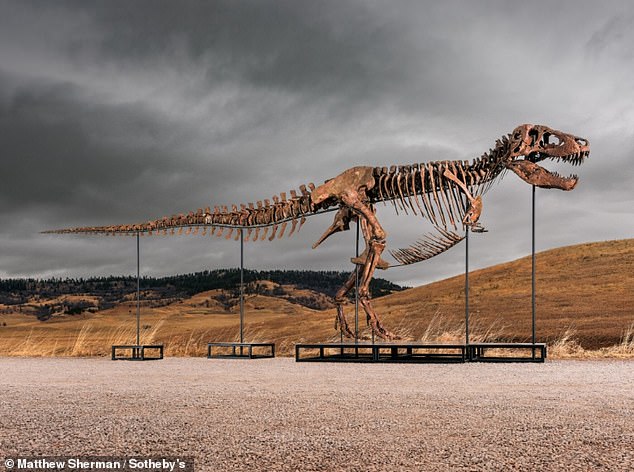
A fearsome T. rex, once the ruler of the Earth, has become the center of a modern debate between scientists and the super-rich. One of the largest and most complete T. rex skeletons ever discovered recently fetched over $50 million (£37 million) at auction, making it the most expensive ever sold. This fossil, nicknamed ‘Gus,’ was found in South Dakota’s Hell Creek Formation and remained hidden for 67 million years before being excavated by a private company in 2021.
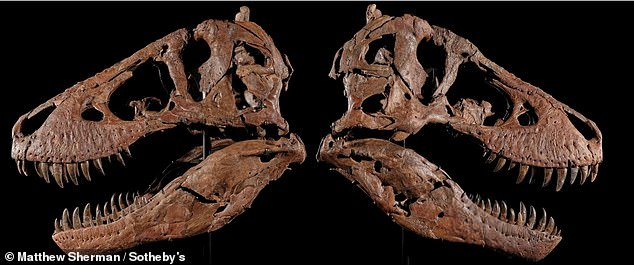
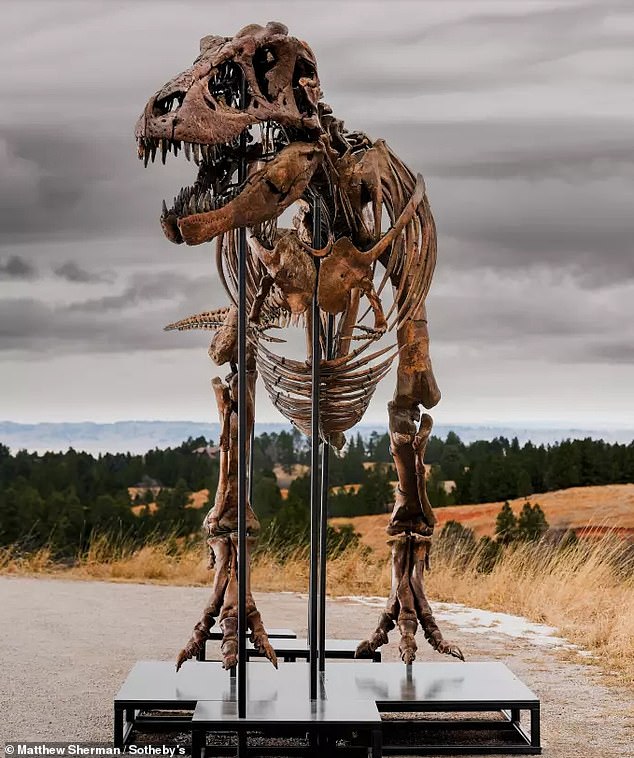
At 61% complete, ‘Gus’ is an outstanding fossil with an exceptionally preserved skull and even signs of bite marks from another prehistoric beast. The towering skeleton, standing 12.5ft (3.8m) tall, would be the centerpiece of any natural history museum. However, it now belongs to a private owner who won a fierce bidding war at Sotheby’s auction.
This sale has caused an uproar among paleontologists, who argue that such a significant specimen may now be out of reach for researchers. The Society of Vertebrate Paleontology has released a statement emphasizing that scientifically important fossils represent far more than rare collectibles. Their longstanding position is that these specimens should be permanently curated in accredited museums, universities, and other public research institutions where they remain available for scientific investigation, education, and public exhibition.
The Importance of Scientific Research
The society pointed out that many of the most significant scientific advances in paleontology have come years after a fossil was collected. Modern research techniques, including high-resolution CT imaging, geochemical analyses, and molecular investigations, are still revealing new information from fossils collected more than a century ago. Because these historic specimens have remained in public collections, researchers have been able to revisit them repeatedly as scientific methods have evolved.
The same opportunity should remain available for scientifically important fossils discovered today. As the commercial market for exceptional dinosaur fossils continues to grow, museums and universities face increasing challenges acquiring specimens of the greatest scientific importance. When these fossils enter private ownership without provisions for long-term access, opportunities for future research, education, and public engagement may be permanently diminished.
The Society of Vertebrate Paleontology encourages fossil finders, auction houses, and prospective buyers to work with accredited public institutions to ensure that scientifically significant fossils remain permanently available for scientific study and for the benefit of everyone.
The Discovery of Gus
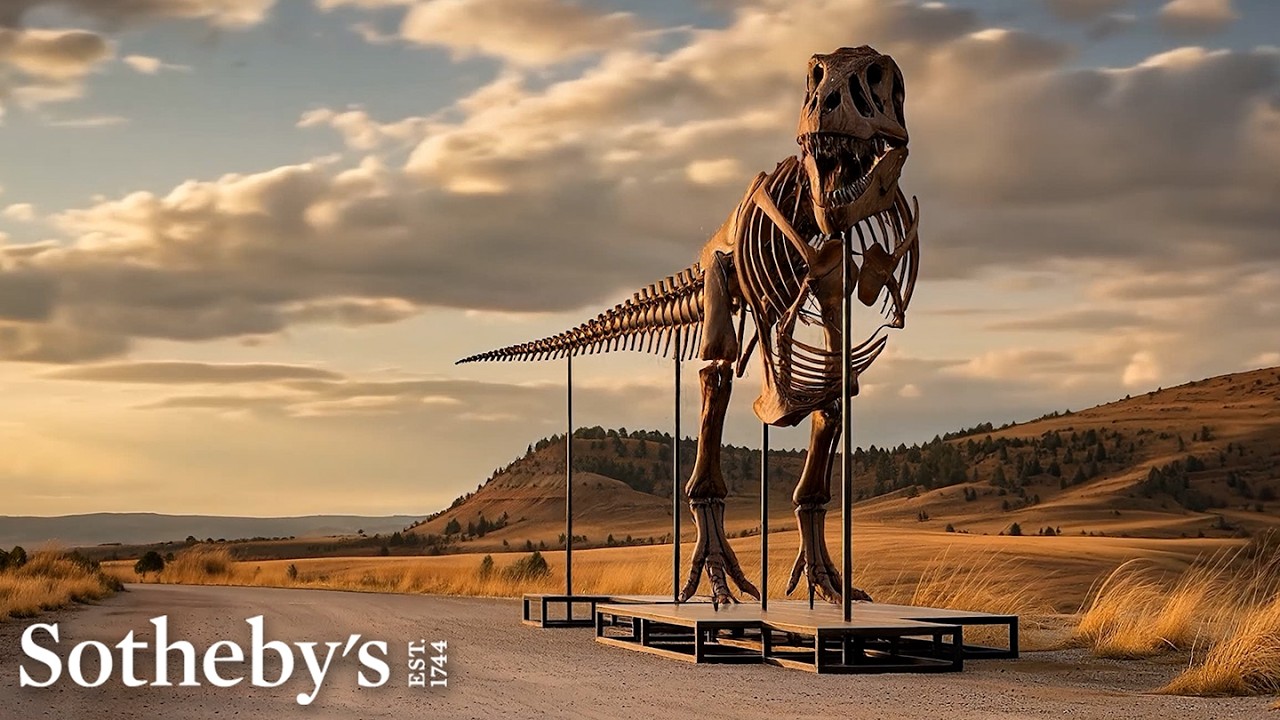
Uncovering a 38-foot-long T-Rex Skeleton: Meet Gus the T-Rex | Sotheby’s
People think finding a dinosaur means digging a hole and pulling out a skeleton. It almost never works that way. Gus is a 38-foot-long T. rex, one of the largest and most complete ever discovered — 63% complete, with those bones making up 75 to 80% of the animal’s total mass. He was found in 2021 in South Dakota, on a ranch where the team had just wrapped another project and decided, almost on a whim, to spend an awkward couple of days prospecting somewhere stranger than usual. The first bone — a metatarsal — broke the surface within hours. What followed was five years of excavation, mapping, and restoration: nearly a thousand individual pieces collected, identified, and painstakingly reassembled by hand, bone by bone, in a process that has almost nothing in common with how the movies show it.
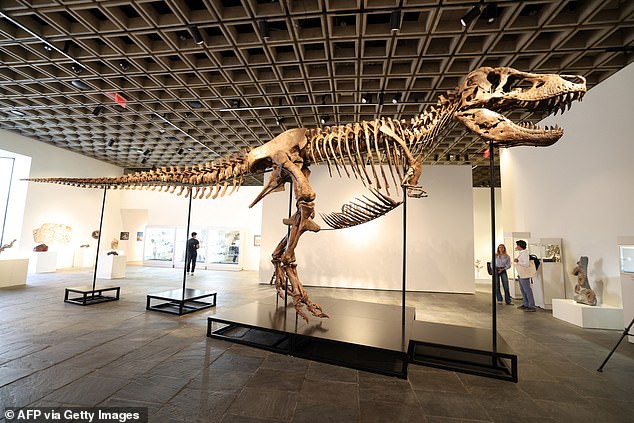
The animal was eventually mounted on a custom armature inside one of the only spaces in town big enough to hold him — a pickleball court. Gus is named for Gary Licking, the rancher whose land he was found on. Gary died partway through the process and never saw the finished mount. His widow, Dana, has stayed close to the project throughout, and the team still brings her in whenever there’s a piece of Gus she’ll want to see. Gus goes on public exhibition starting July 1st and is on offer as part of the Natural History sale on 14 July at the historic Breuer building in New York.
Expert Opinions and the Role of Private Companies
Professor Richard Butler, a vertebrate paleontologist at the University of Birmingham, described the sale as ‘very concerning,’ adding that fossils not kept in a recognized museum collection are ‘lost to research.’ Meanwhile, Professor Stephen Brusatte, from the University of Edinburgh, said there is ‘little that scientists, museums or universities’ can do when the fossils fetch such high prices.
Experts at Sotheby’s have defended the excavation of Gus by a private outfit, suggesting that without such companies, some dinosaurs may never be removed from the ground. Its price, they say, is a reflection of the importance of the fossilized remains and the efforts required to recover them.